Experience
Raw Sewage Cleanup in Austin
Raw sewage in a home or business is a health and property risk that needs prompt, professional attention. Raw Sewage Cleanup removes biological waste, reduces pathogen exposure, and restores a safe environment using containment, removal, sanitation, and decontamination. If you are facing a sewage backflow, broken sewer line, or contaminated standing waste in Austin, TX, this page explains what the service includes, how it works, and what you should expect so you can make an informed decision quickly.
What is Raw Sewage Cleanup?
Raw Sewage Cleanup is the professional removal and sanitation of wastewater that contains human waste, biological contaminants, and potentially hazardous solids. The service addresses visible sewage, contaminated building materials, and cross-contamination of surfaces and systems. It commonly includes waste extraction, disposal, surface decontamination, odor control, and recommendations for rebuilding or further remediation.
Raw sewage incidents require more than ordinary cleaning because they involve pathogens, fecal matter, and complex contamination pathways such as porous materials and HVAC systems. Sanitation and decontamination services are integrated into cleanup to reduce infectious agents and odor-causing microbes. Emergency Sewage Cleanup refers to rapid response services that prioritize containment and public-health protection when time-sensitive exposure is present.
Raw Sewage Cleanup also helps document conditions and actions for insurance and health authority requirements. A professional cleanup typically generates an assessment, scope of work, and a plan for permitted disposal of contaminated material.
What does Raw Sewage Cleanup involve in Austin, TX?
A typical Raw Sewage Cleanup in Austin, TX begins with a site inspection to identify the source of the sewage, the extent of contamination, and any immediate hazards. The inspection defines contaminated zones, checks building systems that could spread contamination, and identifies materials that must be removed. Inspectors note structural vulnerability and any access challenges that will affect equipment and personnel.
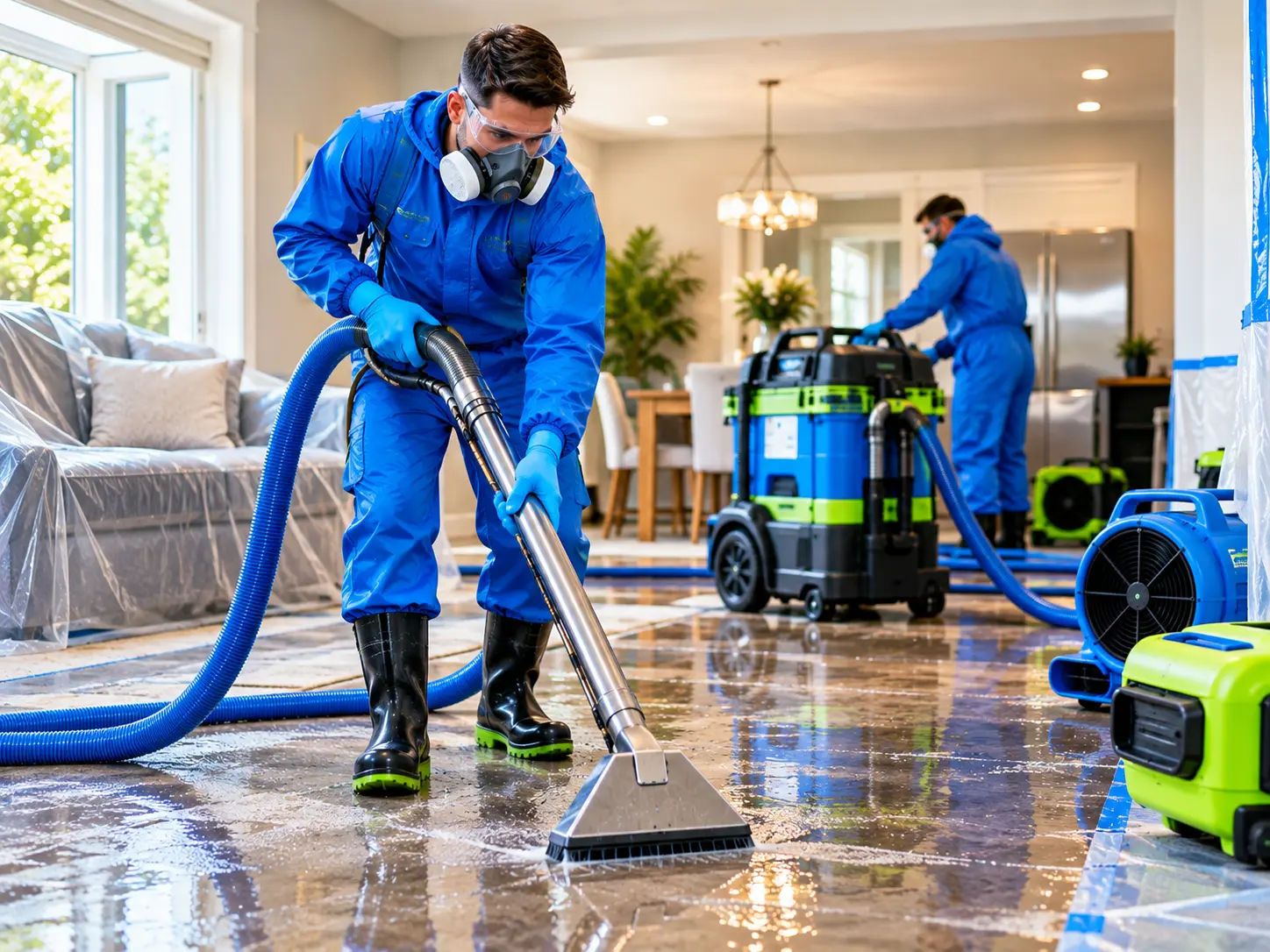
The cleanup stage includes physical removal of standing sewage using pumps and wet vacuums, followed by removal of unsalvageable porous materials such as carpet padding, insulation, and drywall with visible contamination. Surfaces that remain are cleaned with detergents, then disinfected using EPA-registered hospital-grade disinfectants or industry-recommended products. Decontamination can include HEPA vacuuming, antimicrobial application, and odor control measures.
Sanitation and decontamination services also evaluate impacts to mechanical systems. HVAC ducts, sump pumps, and drainage lines can hold or distribute contaminants. Professionals may isolate or clean these systems to prevent recontamination. Waste handling includes secure packaging, transport, and legal disposal of sewage-contaminated materials.
Who needs Raw Sewage Cleanup and when?
You need Raw Sewage Cleanup when wastewater containing human waste, fecal bacteria, or sewage odors is present in living or occupied spaces. Typical triggers include sewer backups, septic failures, storm-induced contamination, damaged sewer mains, and overflows from toilets or floor drains. Properties with finished floors, porous finishes, or sensitive occupants (infants, elderly, immune-compromised) commonly require professional cleanup.
Emergency Sewage Cleanup is appropriate when contamination threatens immediate occupant health, when large volumes of sewage are present, or when contamination reaches structural cavities or HVAC systems. If sewage is outside normal plumbing fixtures, or if standing water is more than a few inches deep or has soaked into materials, professional intervention is needed. Professionals assess whether temporary relocation or shutdown of building systems is required.
Anyone responsible for a public or commercial space—schools, rental units, restaurants—should arrange professional cleanup promptly to meet public health expectations and reduce liability. In homes, fast action reduces long-term damage and limits the spread of microbes into hidden areas.
How does the Raw Sewage Cleanup process work?
The Raw Sewage Cleanup process typically follows an ordered sequence to reduce risk and restore safe conditions: 1. Initial contact: Collect basic details, confirm safety risks, and schedule an on-site assessment. 2. Assessment: Inspect source, contamination extent, building systems, and access points to prepare a scope. 3. Scope identification: Define zones, list materials to remove, and determine required equipment and personnel. 4. Preparation: Secure utilities, isolate HVAC, set up containment, and protect unaffected areas. 5. Service execution: Extract sewage, remove contaminated materials, clean, disinfect, and remediate structural elements. 6. Inspection or quality checks: Verify sanitation levels, perform visual and, if applicable, microbial testing. 7. Completion: Remove containment, dispose of waste per regulations, and provide documentation of work performed. 8. Follow-up or maintenance: Recommend monitoring, repairs, or mold prevention steps and schedule re-checks if needed.
Each step focuses on controlling spread and documenting actions. Professionals coordinate disposal with local regulations and may advise on reconstructive steps such as replacing wall cavities or subflooring. Time on site varies with volume of contamination and material removal requirements.
What factors affect Raw Sewage Cleanup?
Several property and event attributes change the scope and required methods for Raw Sewage Cleanup: - Contamination volume and saturation depth affect extraction time and equipment needs. - Type of sewage (clean water mixed with sewage, septic backflow, or raw sewage) influences disinfection protocols. - Materials affected—porous materials generally require removal while non-porous surfaces can be disinfected. - Accessibility of the contaminated area determines labor and specialized equipment such as pumps or confined-space gear. - Building systems exposure, such as HVAC, electrical, and plumbing, complicates containment and may require subcontracted specialists. - Weather and seasonal conditions can affect drying times and odor control measures.
Professionals assess these factors during the initial inspection to create a realistic timeline and budget estimate. They also identify risks such as electrical hazards and structural weakness that may change the workflow.
What should you expect from Raw Sewage Cleanup in Austin, TX?
Expect a professional team to first secure the scene to protect occupants and workers. That includes shutting off electricity in affected areas where practical, isolating HVAC to prevent cross-contamination, and establishing containment barriers. Teams will also prevent tracking of contaminated material into clean zones and place clear signage as needed.
Expect physical removal of contaminated solids and unsalvageable building materials, followed by cleaning and disinfection of remaining surfaces. The scope may include HEPA vacuuming, antimicrobial treatments, and the application of sealing or encapsulating products where full removal is not feasible. Professionals will coordinate safe transport and disposal of contaminated waste in compliance with local regulations.
Expect documentation: a written assessment, scope of work, and completion report that lists materials removed, disinfectants used, and any recommended repairs or monitoring. This documentation helps with insurance claims and future maintenance planning. Time for completion varies; the professional will provide an estimated schedule after the assessment.
What safety precautions and equipment are used?
Safety starts with personal protective equipment (PPE) such as gloves, impermeable suits, boot covers, eye protection, and respiratory protection when airborne contaminants are possible. Professionals choose PPE based on contaminant type, work performed, and confined-space rules. Respirators or powered air-purifying respirators (PAPRs) are used when aerosolization or heavy bioaerosol loads are likely.
Equipment commonly used includes submersible and trash pumps for bulk removal, HEPA-filtered vacuums for particulate capture, negative-air machines to prevent contamination spread, and industrial dehumidifiers to speed drying. Disinfectants are selected for broad-spectrum antimicrobial action and used per manufacturer directions to ensure adequate contact time. Proper handling and dilution of chemicals are critical to safety and effectiveness.
Professionals also manage electrical risks by de-energizing circuits in wet areas and by using ground-fault-protected equipment. Confined-space work requires specialized training and monitoring; professionals follow safe-entry procedures to reduce oxygen or toxic-gas hazards.
How should I prepare before the crew arrives?
Prepare by securing occupants and pets away from the affected area and assembling any utilities or property documents that can help the crew. Turn off HVAC systems if safe to do so, and avoid walking through contaminated areas to reduce tracking. Photograph visible damage for insurance documentation before cleanup begins, if it is safe to take photos.
Provide access to utilities, keys, and any building plans or recent renovations that may affect remediation. Identify any sensitive or high-value items so the crew can prioritize salvageable content or move items out of harm’s way. Notify your insurance provider early and keep records of communication and receipts associated with the incident.
Avoid attempting extensive cleanup yourself if raw sewage is present. Professionals have equipment and protocols to reduce cross-contamination and exposure. If initial actions are necessary for immediate health reasons, wear appropriate gloves and avoid creating aerosols.
What influences the cost and duration?
Cost and duration depend on a combination of site-specific variables rather than a fixed service price. Variables include the volume of contaminated material, type of sewage, number of rooms affected, complexity of removal from structural cavities, and required disposal methods. Accessibility issues, such as work on upper floors, basements with limited entry, or commercial properties with operational constraints, add labor time and equipment needs.
Other cost factors include the need for HVAC cleaning, mold remediation following drying, and the requirement for testing or third-party inspections. Permit fees, disposal costs, and local disposal facility requirements can also affect final pricing. Duration often depends on drying time after extraction; even after cleaning and disinfection, structural components may need days to weeks to fully dry before reconstruction.
A professional assessment provides a tailored estimate that outlines the variables and their likely impact on schedule and budget. Neither cost nor duration can be established accurately without an on-site evaluation.
What questions should you ask a Raw Sewage Cleanup provider?
Ask whether the provider performs on-site assessments and what is included in the written scope of work. Request details on the specific cleaning and disinfecting agents they plan to use and whether they perform post-cleaning verification such as ATP or microbiological testing when appropriate. Confirm how they handle contaminated material disposal and whether they document chain-of-custody for waste removal.
Inquire about safety practices: what PPE and containment measures their team uses and how they manage electrical and HVAC-related risks during cleanup. Ask how they coordinate with local agencies or utilities if a public system failure or municipal notification is required. Request references or examples of similar projects, and ask what follow-up monitoring or guarantees of workmanship are offered in writing.
Also discuss practical logistics: schedule availability for emergency response, anticipated crew size, estimated timeline after assessment, and what you should do to prepare before they arrive. Clarify invoicing structure and whether they can provide documentation compatible with insurance claim processes.
Emergency response considerations for properties in Austin, TX
Emergency Sewage Cleanup in Austin, TX often prioritizes rapid containment and public-health protection, especially when contamination threatens occupied spaces. Local response plans and municipal utilities can affect how teams coordinate work; professionals typically contact or advise you to contact local sewer authorities when backups originate from shared infrastructure. Coordination reduces the risk of reoccurrence.
Weather and seasonal conditions can affect drying and odor management, but do not alter the need for initial containment and extraction. Professionals will select equipment and containment strategies that match the immediate conditions at the property. Where municipal requirements exist for disposal or reporting, a cleanup provider will advise and, when appropriate, assist with compliance.
If a sewage incident affects multiple units or public spaces, professionals often work with property managers and public health authorities to document impacts and to establish safe re-occupancy criteria. Local building codes and health guidance inform decisions about what building materials must be removed versus disinfected.
Contact the team about your Raw Sewage Cleanup needs at (888) 679-3880. Discuss your situation, arrange an on-site assessment, and request an itemized scope of work and documentation plan for insurance or regulatory purposes.
FAQs about Raw Sewage Cleanup, Emergency Sewage Cleanup, Sanitation and Decontamination Services in Austin, TX
Q: Can I clean up raw sewage myself to save money? A: DIY cleanup is not recommended when raw sewage contains human waste; professional cleanup reduces health risks and limits secondary damage. Professionals have proper PPE, pumps, and disinfectants, and they know how to handle waste disposal and document the process for insurance. If you must take initial steps, avoid creating aerosols, wear protective gloves, and limit exposure time until professionals arrive.
Q: How do professionals decide which materials must be removed? A: Professionals evaluate porosity, contamination depth, and structural role of materials to decide removal versus salvage. Porous materials that retain sewage—such as carpet padding, upholstered furniture, and porous drywall—often require removal because thorough sanitation is impractical. Non-porous materials like sealed tile or metal components can often be cleaned and disinfected effectively.
Q: Will insurance cover Raw Sewage Cleanup in all cases? A: Coverage varies by policy language, cause of the sewage event, and whether preventative maintenance obligations were met. Policies commonly cover sudden and accidental sewer backups if endorses are present, but exclusions apply for gradual damage or neglected systems. Keep all documentation, photos, and the cleanup scope to support any claim submission.
Q: Are microbial or pathogen tests necessary after cleanup? A: Testing is not always required but may be useful for large-scale contamination, commercial properties, or when occupants are vulnerable. Microbial testing can confirm the effectiveness of sanitation in sensitive environments. Professionals can recommend appropriate testing when documentation or third-party verification is needed.
Q: Can contaminated items be salvaged and restored? A: Some non-porous items and certain textiles can be cleaned, disinfected, and salvaged, while many porous items are irreversibly contaminated and must be discarded. Salvage decisions weigh material composition, sentimental or monetary value, and the likelihood of complete decontamination. Restoration specialists can often clean hard contents and coordinate storage while structure remediation occurs.
Q: Do professionals handle sewage-damaged HVAC systems? A: HVAC components exposed to raw sewage or contaminated water require inspection and targeted cleaning to prevent redistribution of contaminants. Ductwork, coils, and filters may need cleaning or replacement depending on contaminant penetration. Professionals will advise whether temporary shutdown, duct cleaning, or component replacement is necessary.
Q: What are common signs of hidden contamination after a sewage event? A: Persistent odors, unexplained staining, elevated humidity in wall cavities, or recurring microbial growth indicate potential hidden contamination. Professionals use moisture meters, thermal imaging, and targeted probes to detect concealed contamination. Early detection reduces long-term structural and indoor air-quality problems.
Q: Are there legal disposal requirements for sewage-contaminated waste in Austin, TX? A: Disposal requirements vary by jurisdiction and by waste type; professionals handle packaging and transport to approved facilities per local regulations. Secure containment and proper labeling prevent public exposure and ensure compliance with waste management rules. Ask the cleanup provider how they handle disposal documentation for regulatory or insurance needs.
Q: Can a provider respond outside normal business hours for an emergency? A: Many cleanup firms offer emergency response or on-call services to address immediate hazards; response capability depends on staffing and scheduling. Confirm availability during your initial contact and ask about expected arrival windows for emergency calls. Rapid containment is often the most important early action.
Q: How long should I keep records after a sewage cleanup? A: Keep cleanup reports, invoices, photos, and test results for the duration your insurer recommends and for at least several years if property damage or warranty issues occur. Documentation helps resolve disputes about cause, extent of damage, and remediation steps over time. Professional providers can supply the documentation formats commonly requested by insurers.
Contact the team about your Raw Sewage Cleanup needs at (888) 679-3880 to arrange an on-site assessment, request a written scope of work, or discuss emergency response options for your property in Austin, TX.
[End of Article]
Quality Assurance
We guarantee exceptional raw sewage cleanup results with every project.
Prompt Service
On-time service delivery with attention to every detail.